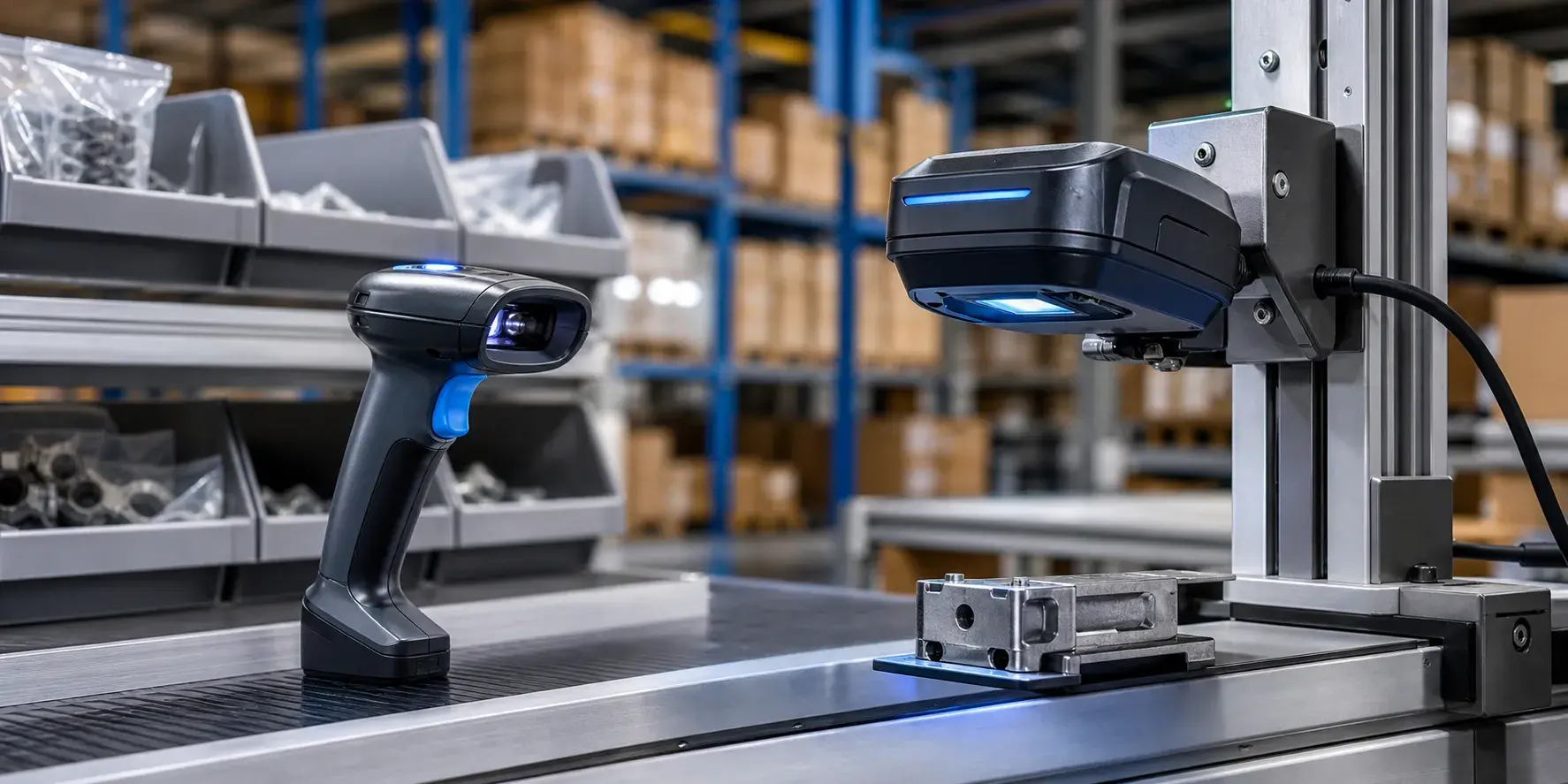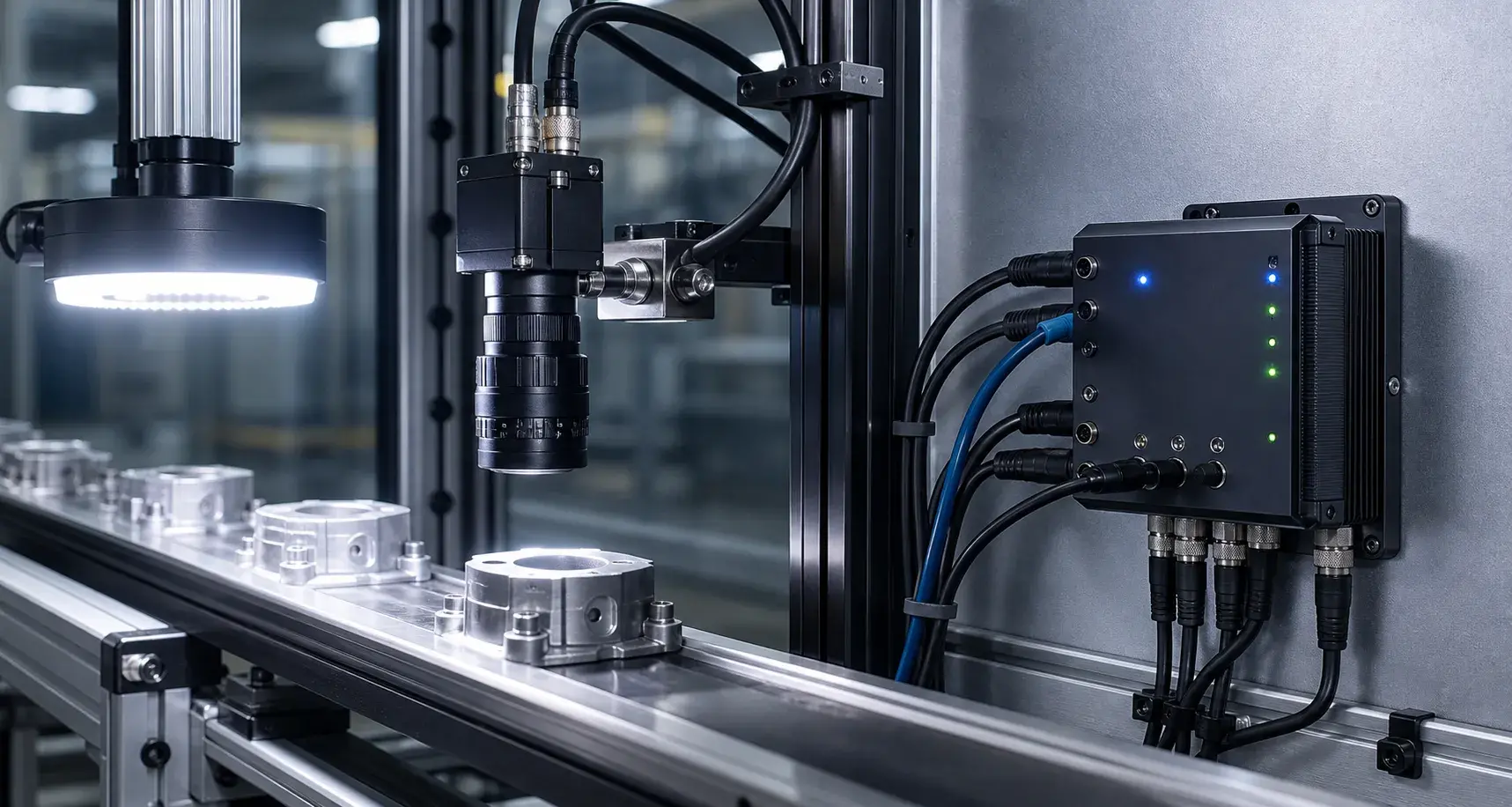
On-site Differences Among DPM, QR and Barcodes
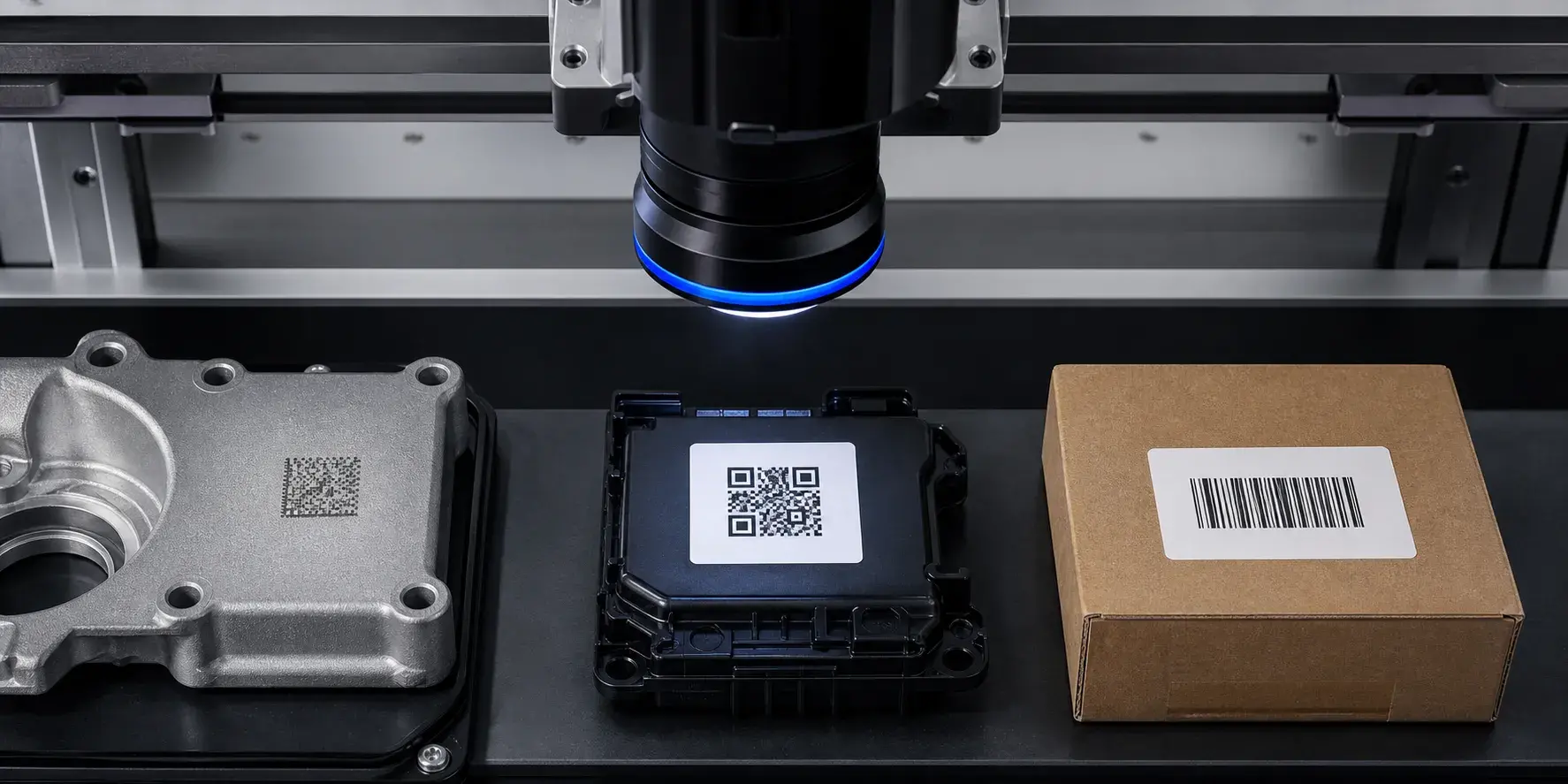
Summary: Compare DPM, QR code and linear barcode reading conditions, including lighting, focus, surface quality and on-site validation needs.
Different codes, different problems
DPM codes, QR codes and linear barcodes are all used for traceability, but they behave differently on site. A DPM code is marked directly on a part by laser, dot peen or engraving. It may have low contrast and can be affected by machining marks, oil, oxidation or curved surfaces. A printed QR code usually offers more contrast, but small module size, damaged labels and poor focus can still cause unstable reading. A linear barcode needs clear bars across enough image width, and it may fail when the label is wrinkled, stretched or partially hidden.
Because the failure modes are different, a single scanner or code reader setting may not solve every project. The optical design, lighting method and algorithm tolerance must match the actual code surface.
DPM code considerations
DPM applications usually require the most careful lighting test. On metal parts, coaxial light can help when the surface is flat and reflective, while low-angle bar light can reveal engraved or dot-peen marks by creating shadow contrast. If the part is curved, the same light may create glare in one area and darkness in another. Camera exposure and lens depth of field also matter because shallow focus can make small cells disappear.
The reading system should be tested with parts from normal production, not only with a clean sample. Worn tools, inconsistent marking power and surface contamination can all reduce code quality.
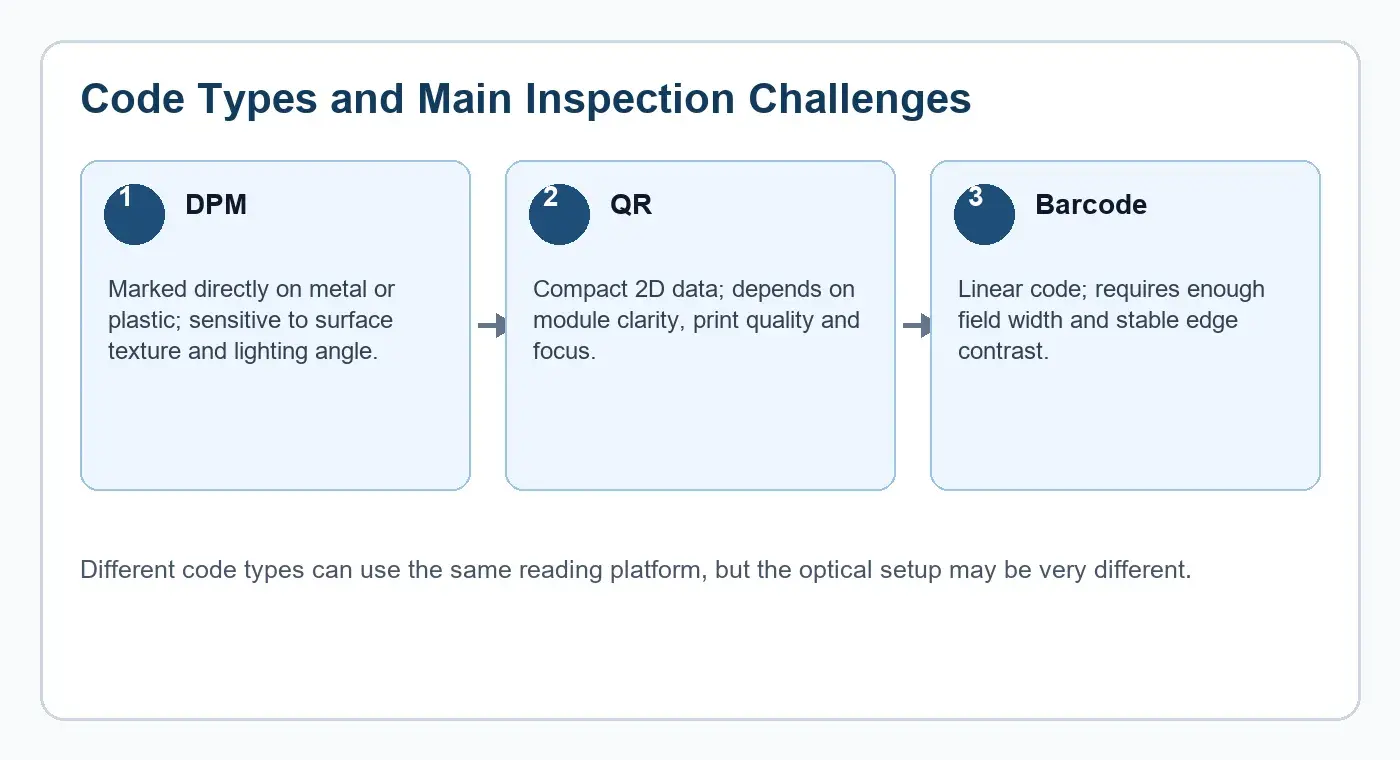
Body image: code types and main inspection challenges.
QR and barcode considerations
QR codes are more tolerant than many DPM marks because they include error correction, but they still need enough resolution and contrast. The code should occupy enough pixels in the image, and the lens should keep the full code area in focus. For linear barcodes, orientation and field coverage are important. If the scanner sees only part of the code, or if the bars are blurred by motion, reading stability will drop.
In packaging and logistics, label quality and placement often decide the final result. Fixed readers need consistent part positioning, while handheld scanners need ergonomic access and enough reading distance.
On-site validation should include normal samples, damaged samples and borderline samples. A system that reads only perfect labels may still fail during real production. For traceability projects, engineers should also check how the code reader reports failed reads, how the production system handles rework, and whether operators can quickly identify the reason for a no-read event.
Conclusion
The best code reading solution starts by identifying the code type, surface, size, speed and installation constraints. DPM, QR and barcode projects may share similar goals, but their lighting and setup requirements are not the same. Careful sample testing helps avoid unstable reading after the system is installed.
Practical Checklist
- Separate DPM, QR and barcode samples during validation.
- Test real surfaces, not only clean demonstration codes.
- Confirm resolution, focus and lighting angle together.