How to Choose Wireless and Wired Barcode Scanners
Summary: Learn how to choose between wireless and wired barcode scanners for inventory, traceability, fixed stations and high-frequency scanning tasks.
Start from the workflow
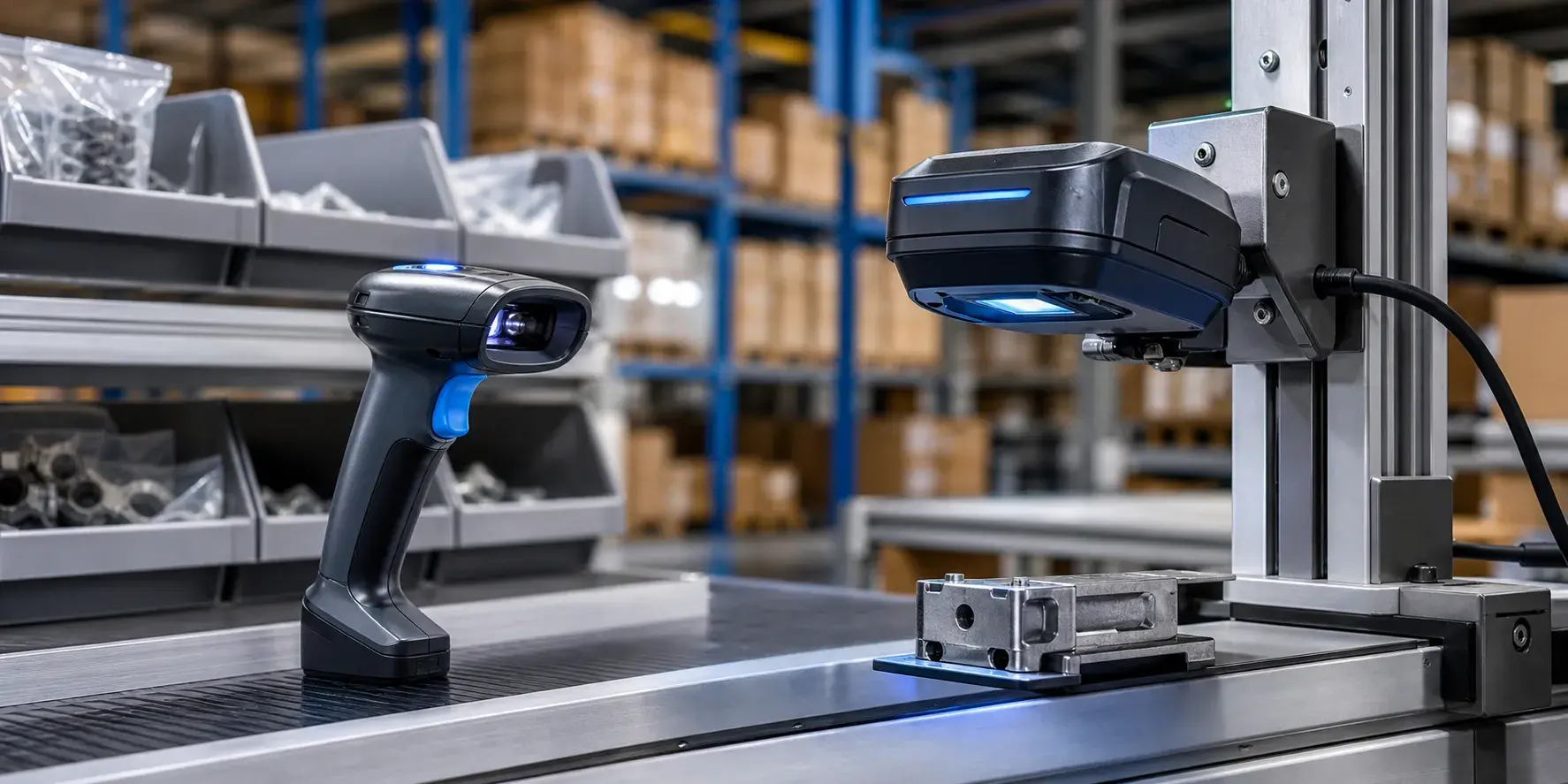
Wireless and wired barcode scanners can both read common codes, but they serve different operating styles. A wireless scanner is usually better when the operator must move around inventory racks, pallets, carts or flexible workstations. It reduces cable restrictions and makes scanning easier in changing locations. A wired scanner is often better for fixed stations where the scanner stays in one place and reads continuously throughout the shift.
Before choosing a model, the team should describe the actual scanning workflow. How far will the operator move? How often is the code scanned? Is the scanner handheld, mounted or integrated with a machine? Is the barcode on a label, package, metal part or moving product? These questions matter more than a simple comparison of wireless versus wired.
When wireless makes sense
Wireless scanners are useful for inventory management, warehouse picking, tool tracking and flexible production cells. They improve movement and reduce cable clutter. However, they require attention to battery life, charging routine, communication distance and pairing stability. If the environment has many metal racks or wireless devices, the team should test connection reliability in the real area before deployment.
Another consideration is operator behavior. A wireless scanner can be misplaced or left uncharged if the process is not managed. Charging docks, spare batteries and clear storage positions can prevent daily interruptions.
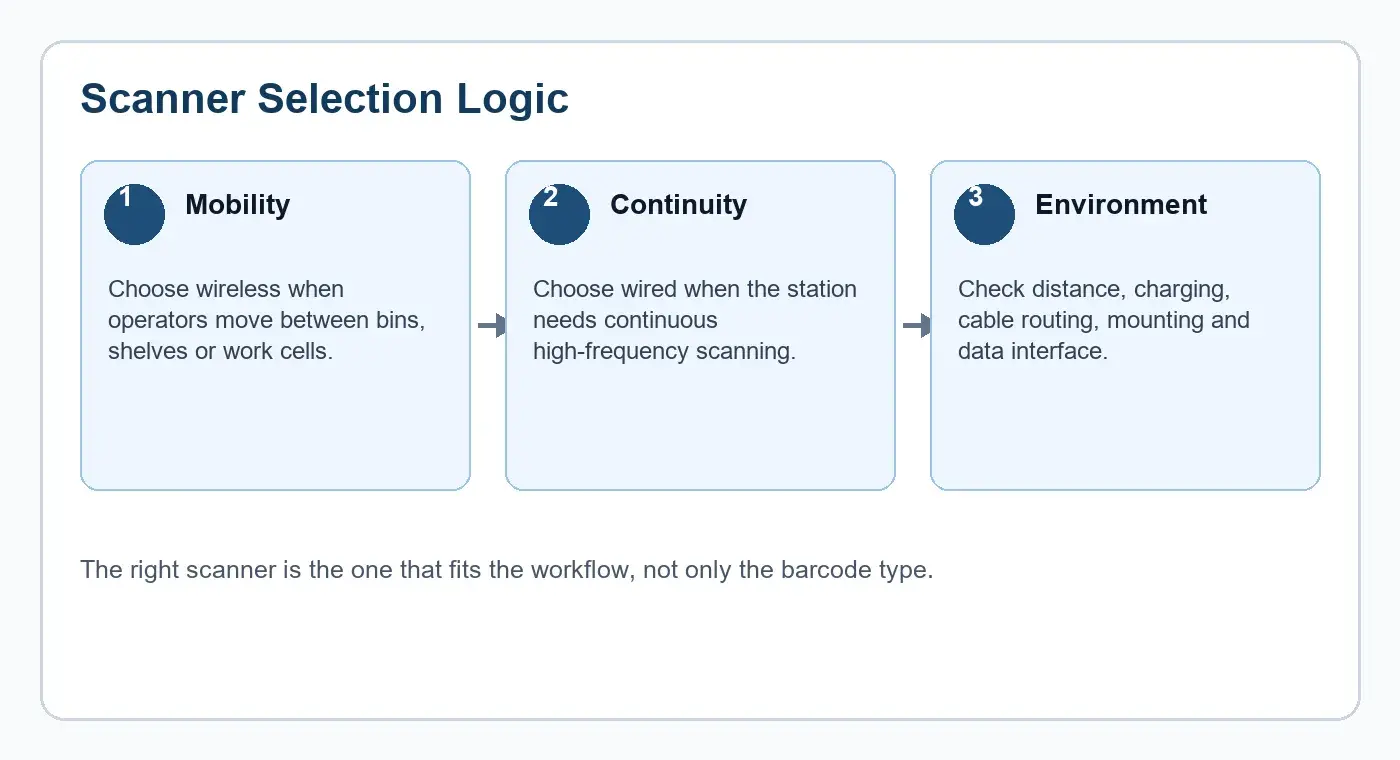
Body image: scanner selection logic.
When wired makes sense
Wired scanners are strong choices for fixed workstations, continuous scanning and applications where downtime must be minimized. They do not depend on battery charging and usually provide a stable data connection. Cable routing should still be designed carefully so the scanner does not interfere with fixtures, moving parts or operator movement.
For high-frequency scanning, a wired solution can be simpler to maintain. It is also easier to integrate into benches, conveyors and automated cells where the scanner position is fixed. The main tradeoff is reduced mobility, so the code must reliably pass through the scanning area.
A good selection test should include the actual label material, scanning distance, operator movement and data interface. Teams should compare first-read rate, handling comfort, recovery after failed reads and daily maintenance effort. This makes the final decision more realistic than choosing only from communication type or catalog reading distance. It also helps the purchasing team explain why a specific scanner style is better for the production process.
Conclusion
The best selection depends on mobility, scan frequency, installation position and maintenance expectations. Wireless scanners fit flexible human workflows, while wired scanners fit fixed, continuous and high-reliability stations. Testing the scanner with real labels, distances and operating conditions is the most practical way to confirm the final choice.
Practical Checklist
- Map the scanning workflow before choosing wireless or wired.
- Test scan distance and connection stability on site.
- Plan charging, mounting and cable routing before rollout.